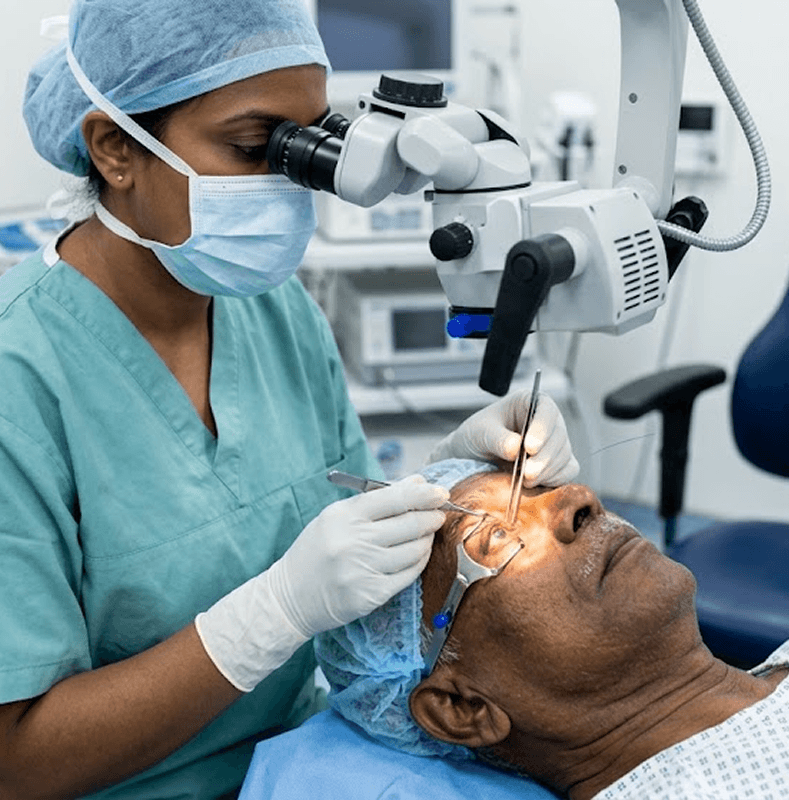






SPECIALITIES

Cornea

Care for the clear front surface of the eye, from infections and keratoconus to corneal transplant. 

*Monday to Saturday, 9 am to 8 pm | Consultations from 8:45 am

Consultations

Habsiguda and Chanda Nagar.
Surgery at Habsiguda.

Insurance and Schemes

EHS, CGHS and cashless insurance accepted. Aarogyasri covers selected cornea procedures.

Surgery Type

Day Care only. Depends on the procedure. A transplant needs donor tissue from an eye bank.

Understanding Cornea

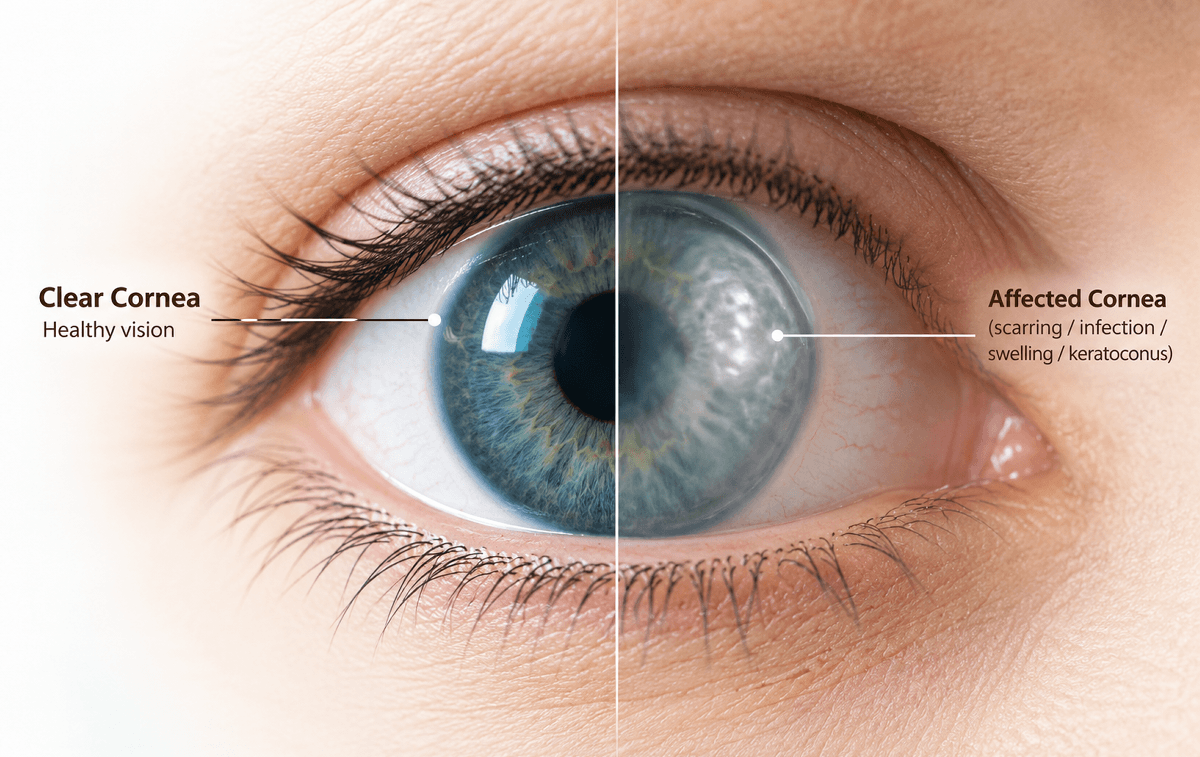
Healthy Cornea
(Pristine)
Affected Cornea
(Distortion)

What happens to the cornea?

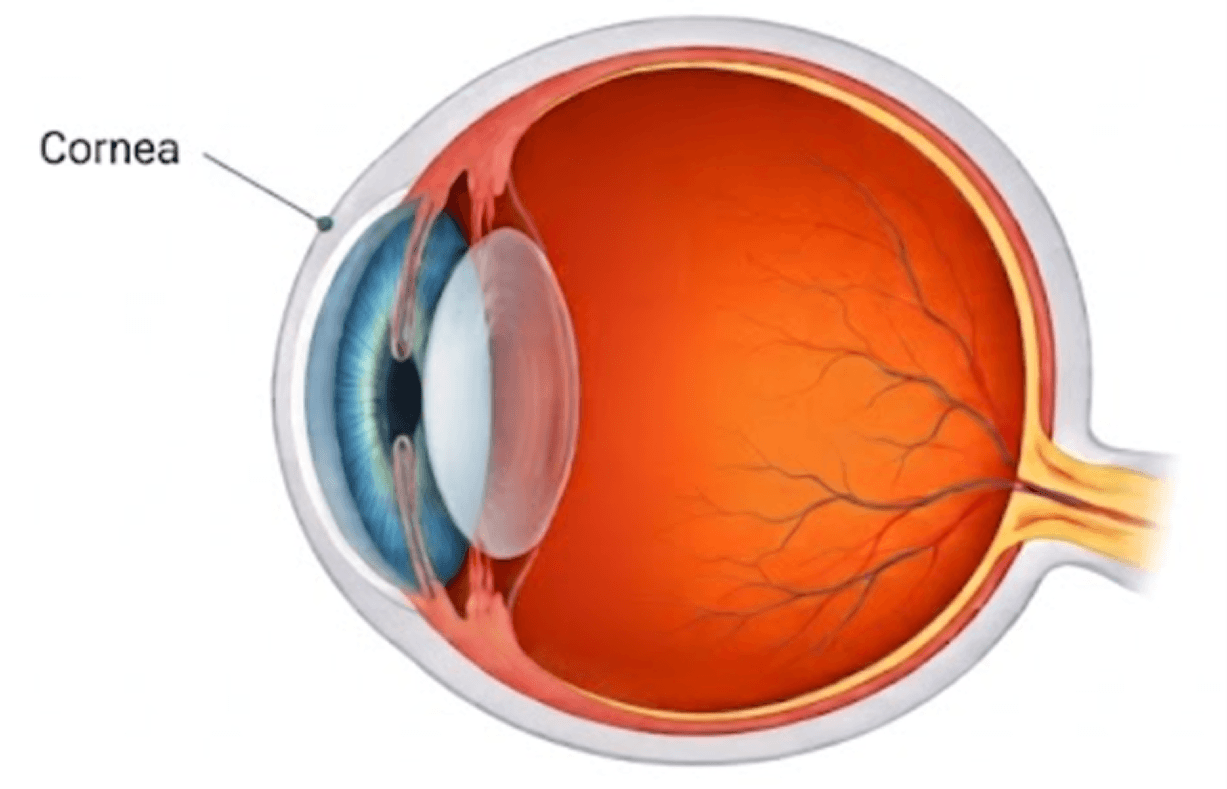
  • The cornea is the clear, dome-shaped window at the front of the eye. It protects the eye and does most of its focusing.
  • When the cornea is infected, scarred, swollen or misshapen, vision turns blurred or hazy and the eye can be painful.
  • Some corneal problems, such as infections, need treatment the same day.
  • Eye pain and redness
  • Sensitivity to light and watering
  • Blurred or hazy vision
  • A gritty feeling, as if something is in the eye
  • A white or grey spot on the cornea 
  • Glare or halos around lights 
  • Frequent glasses changes with distorted vision (keratoconus) 

Causes: infection (bacteria, fungi, viruses); injury, including from plant matter, dust or chemicals; contact lens misuse; inherited conditions such as keratoconus; chronic eye rubbing, often linked to allergy; dry eye; vitamin A deficiency.

Risk factors: contact lens wear, especially sleeping in lenses or poor hygiene; farming, construction or dusty work; diabetes or weak immunity; family history of keratoconus; previous herpes eye infection; using steroid or unprescribed eye drops.

  • Infection and ulcer (keratitis): bacterial, fungal, viral or Parasitic
  • Foreign Body, Trauma & Chemical injuries
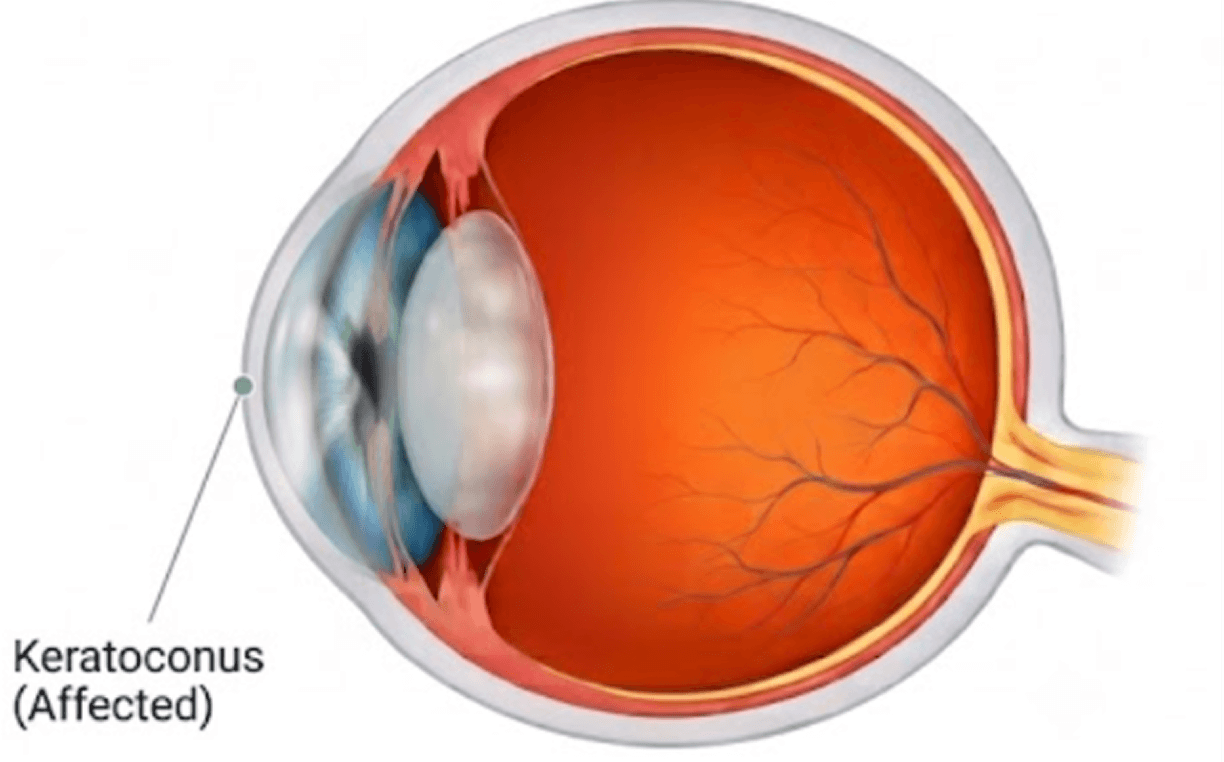
  • Keratoconus: the cornea thins and bulges into a cone shape
  • Scars and opacities: after infection, injury or inflammation
  • Dystrophies and swelling: inherited or age-related, including Fuchs dystrophy
  • Pterygium: a fleshy growth that spreads onto the cornea
  • Dry eye and ocular surface disease
  • Corneal degenerations
  • Do not put home remedies or unprescribed drops in a red or painful eye.
  • Wash hands before touching contact lenses. Do not sleep in them or rinse them with tap water.
  • Wear protective eyewear for dusty work, two-wheeler rides, Sports & Swimming.
  • Do not rub your eyes. Get allergies treated.
  • Get a painful red eye examined early.

See a doctor the same day if the eye is painful and red, especially after an injury (including from plant matter or dust), after contact lens use, or with discharge. Do not use home remedies or leftover drops, and never put in steroid drops on your own.

1. Diagnosis

A Cornea’s condition is confirmed with detailed eye examination. Tests may include:

Corneal Mapping

Maps the shape and thickness of the cornea

Slit-lamp Examination

A close look at the lens and the front of the eye 

Corneal Staining

Shows scratches and ulcers

Scraping and Culture

To find the germ in a suspected infection

2. Treatment

Treatment depends on the condition. Infections are treated first with drops. Transplant is considered when the cornea cannot recover.

When is treatment urgent? 

Infections, Foriegn body & injuries need treatment the same day. Delay can cause scarring and permanent vision loss.

Without surgery: 

Antimicrobial drops for infections, glasses or special contact lenses for keratoconus, and lubricants for dry eye.

Keratoconus care:
  • Lenses: Glasses in the early stage, then special contact lenses for clearer vision.
  • Cross-linking: Strengthens the cornea to stop keratoconus from worsening. Cross linking is a safe procedure in paediatric age group too.
  • Transplant: For advanced keratoconus when lenses no longer help.
Surgical Options:

Corneal transplant (keratoplasty):

The diseased cornea is replaced with donor tissue. Only the clear front part of the eye is replaced, not the eye. It can be full-thickness (PK) or partial-thickness (DALK/DSEK/DSAEK/DMEK), where only the diseased layers are replaced.

Pterygium removal:

Removes the growth from the surface of the eye & conjunctival autograft with or without glue.

Got a diagnosis? Ensure you’re on the right track with a second opinion:

3. Recovery and Post-Op Care

First Week
  • Use eye drops exactly as prescribed 
  • Wear the eye shield while sleeping 
  • Do not rub or press the eye 
  • Keep water, dust and soap out of the eye
  • Wear sunglasses outdoors 
  • No contact lenses until your doctor allows
Weeks 2-4
  • Drops continue, often for months after a transplant, and are reduced gradually
  • Stitches may stay for months and are removed gradually
  • Avoid heavy lifting and contact sports
Follow-up
  • Frequent visits at first, then regular reviews through the first year after a transplant. It depends on case to case basis.

Call us or visit immediately for redness, pain,  light sensitivity or a drop in vision. After a transplant these can signal rejection. 

Got questions about your recovery?

Planning Your Care

Comprehensive care, personalized for you. Know what is covered, what it costs and what to bring.

1.
Diagnosis
Diagnosis
2.
Treatment
Treatment
3.
Recovery
Recovery

Insurance & Schemes

What will it cost?
Consultation fee:

₹700
₹350 for EHS/CGHS beneficiaries

Treatment/ Transplant:
Depends on the condition, procedure and
the donor tissue

Before your visit
Bring:

Plan for: 1-2 hrs in normal case. If the eye is painful or injured, come straight in

Unsure where to start? We’re here to help!

Frequently Asked Questions

Can a corneal infection cause permanent vision loss?

Yes, if it is not treated early. Early treatment protects vision and the eye.

The cornea thins and bulges, blurring and distorting vision. Cross-linking can stop it from worsening, and glasses or special lenses improve vision.

No. Only the front corneal tissue is replaced.

From eye banks, through eyes donated after death with the family’s consent.

Many last for years, with regular follow-up and eye drops as advised.

Yes, with strict hygiene. Never sleep in them, never use tap water, and remove them at the first sign of redness or pain.

Do not rub. Rinse with clean water, do not put in home remedies or old drops, and see an eye doctor the same day.

Eye pain, redness or hazy vision?

Book a cornea consultation at Habsiguda or Chanda Nagar.

Scroll to Top